Yard Regrading & Swales
Reshape low areas and give surface water a path to follow.

YARD DRAINAGE
St. Johns, Duval County, Clay County, Nassau County
If water sits between your house and fence, leaves the backyard soggy or pools at the end of a downspout, we can assess where it comes from and where it can go.
Request a Free Drainage InspectionReshape low areas and give surface water a path to follow.
Collect runoff at low points and carry it to a suitable outlet.
Route roof runoff away from problem areas through a drain line where the site allows.
Restore areas disturbed by the drainage work when included in the quoted scope.
SYSTEM OPTIONS
The correct system depends on the elevations, water source, soil, outlet and available access. Some yards need one approach. Others require grading, collection and discharge components working together.
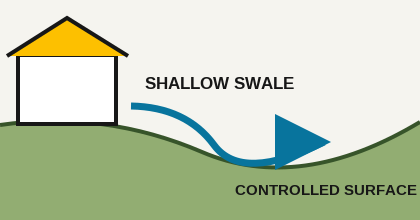
We reshape the surface so runoff follows a controlled path away from the home and toward a suitable low point or outlet.
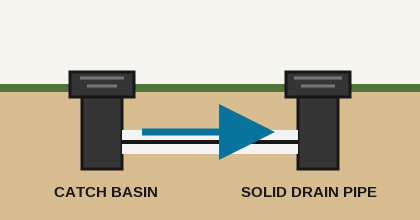
Basins collect water at known low points. Solid buried pipe carries that water through the yard to the planned discharge point.
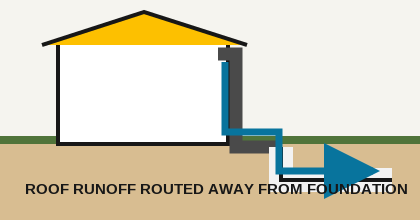
Roof runoff can be connected to a dedicated solid line so it does not empty beside the foundation or into a problem area.
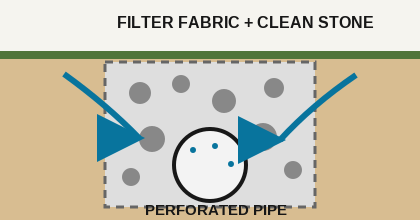
A perforated pipe set in clean stone and wrapped with filter fabric can intercept water moving through saturated soil.
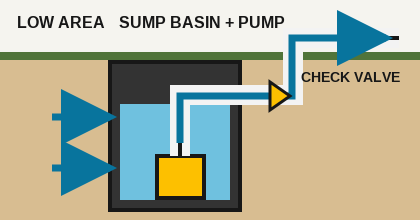
When the site cannot provide enough fall for gravity drainage, a sump basin and pump may lift collected water to an appropriate discharge point. Pump sizing, power, check valves, maintenance access and backup planning are considered in the system design.
When the ground slopes toward your house or downspouts empty beside it, rainwater can collect along the foundation and soak into the surrounding soil. Moisture can seep through cracks, joints, or other openings in the foundation, sometimes showing up as dampness indoors. Regrading and redirecting roof runoff can reduce the amount of water that reaches the foundation.
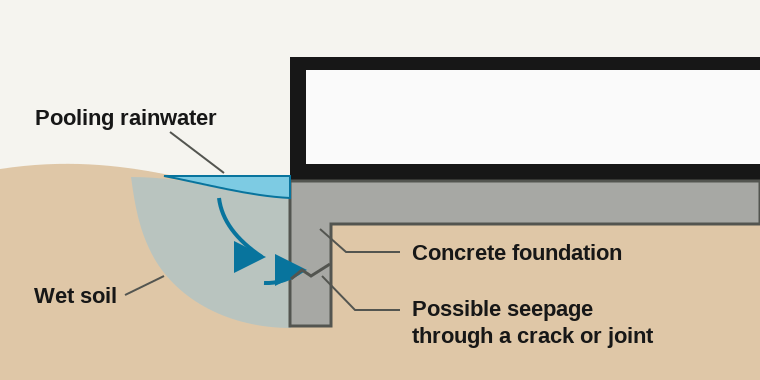
Look for puddles along the wall, downspouts that empty into low spots, or mulch and soil washed toward the house. Photos taken during or just after a storm can help show where the water comes from and where it collects.
Depending on the yard, we may recommend regrading the ground to slope away from the home, extending or tying in downspouts, or using a swale or catch basin to route runoff to a suitable outlet.
If you see new or widening cracks, visible movement, or recurring moisture indoors, have a qualified foundation or building professional assess the cause. Our drainage inspection focuses on how water moves outside the home.
A narrow side yard can collect runoff from the roof and surrounding grades. Regrading and a collection system can work together to move water away from low spots.
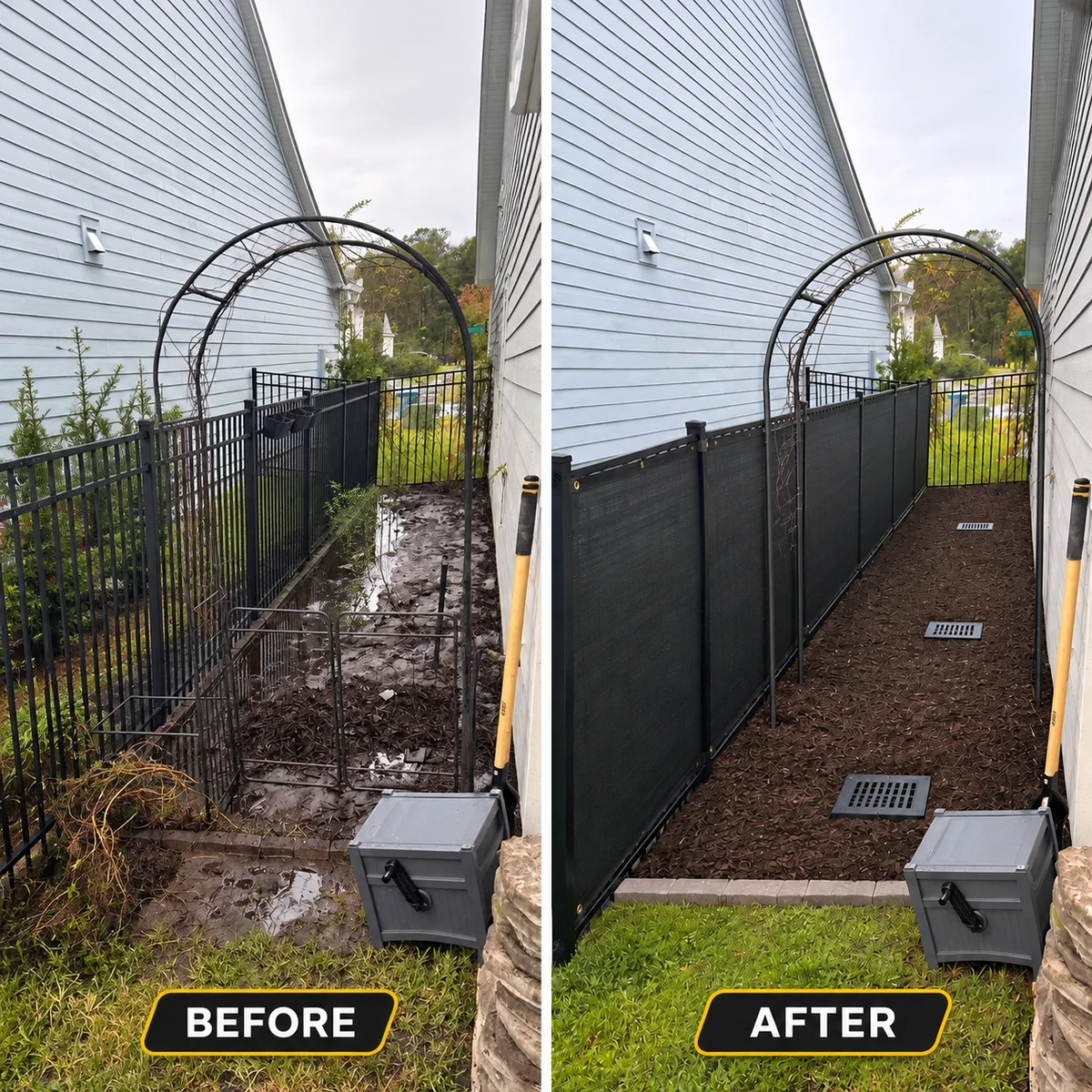
We know what the customer wants: a dry, clean and manageable yard without the fear of foundation or slab issues caused by poor drainage.
We start by measuring the affected areas and shooting existing grade elevations with a laser. This helps us identify the low points, confirm where water is pooling and understand how much fall is available to move it toward a suitable outlet.
We document the areas holding water, check downspout discharge points and measure the space available for grading, basins and buried drain lines.
Laser elevation readings show the existing high and low points and help determine whether water can move by gravity to the proposed outlet.
We explain the first recommended approach and the work it may require. Your final drainage plan depends on several site-specific factors, including elevations, outlet location, soil conditions, access, utilities, existing improvements and the volume of water entering the area.
Your quote will describe the recommended system, proposed outlet, affected areas and any grading or restoration included in the scope.
See all Residential Services ↗